
What is a Kallitype print?
It All Begins Here
A kallitype is a handcrafted photographic print made using an iron-based, silver image process that dates back to the late 19th century. It produces images with a warm, tactile quality. Kallitypes can range in tone from warm brown to neutral grey or even slightly purple, depending on the chemistry and paper used. The final prints are valued for their depth, rich shadow detail and subtle surface textures that change slightly with viewing angle and paper choice.
How it works
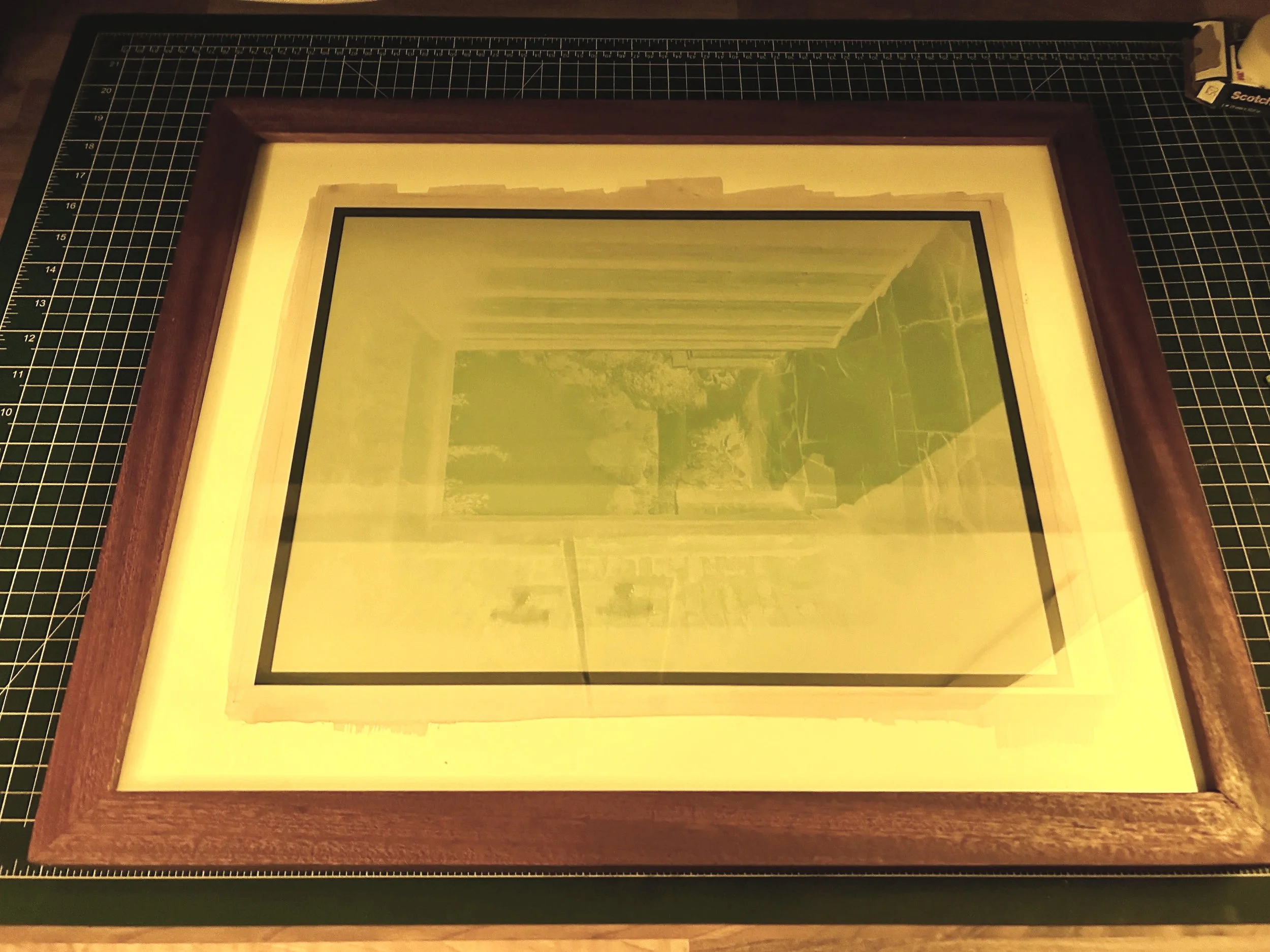
The hand coated paper with negative placed on top secured in a glass print frame ready for uv exposure
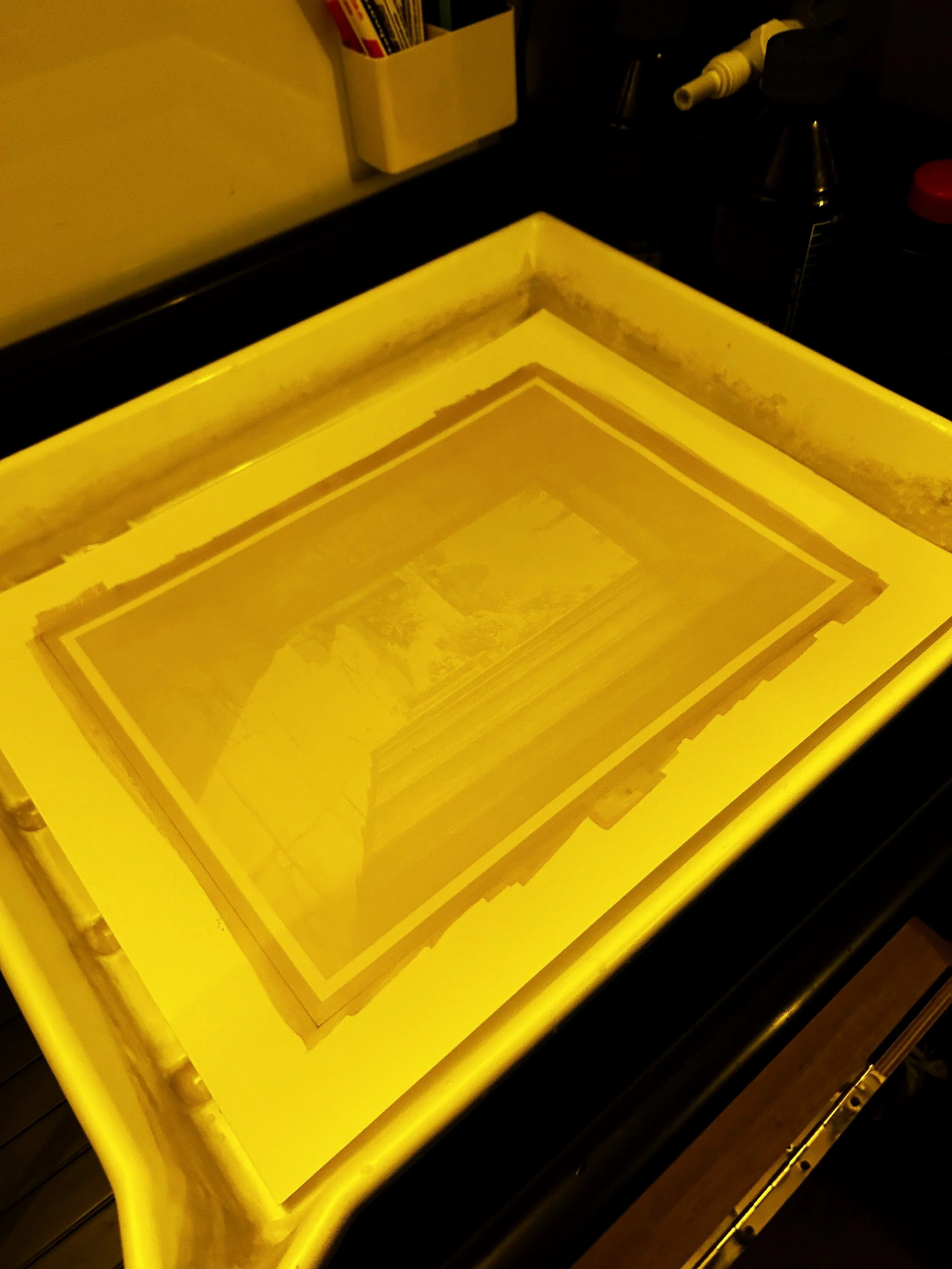
paper removed from contact frame ready for developer, notice latent image already visible before developer is added
A sheet of paper is coated with a light-sensitive solution containing iron salts and silver nitrate.
Once dry, the paper is contact printed under a negative (the same size as the final print) using ultraviolet or very strong visible light. The light reduces the iron salts in proportion to the image on the negative.
The exposed paper is developed in a solution that converts the reduced iron into metallic silver, revealing the visible image.
The print is then fixed to remove any remaining light-sensitive chemicals and washed thoroughly. Many makers tone kallitypes in solutions such as gold or tannic acid to change the image tone, improve permanence and enhance highlight separation.
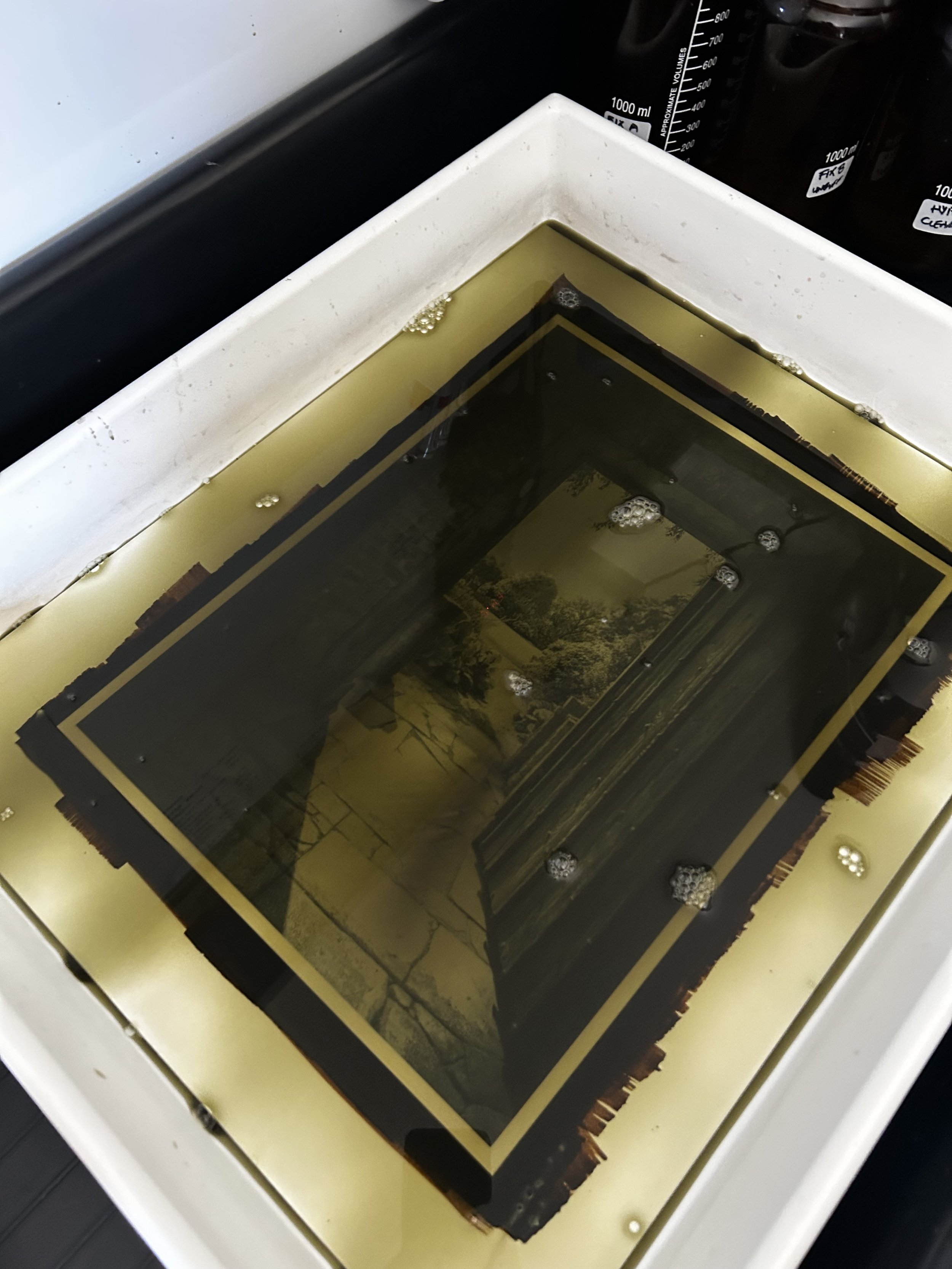
same image once the developer has been run over the photo to bring out the depth and tones
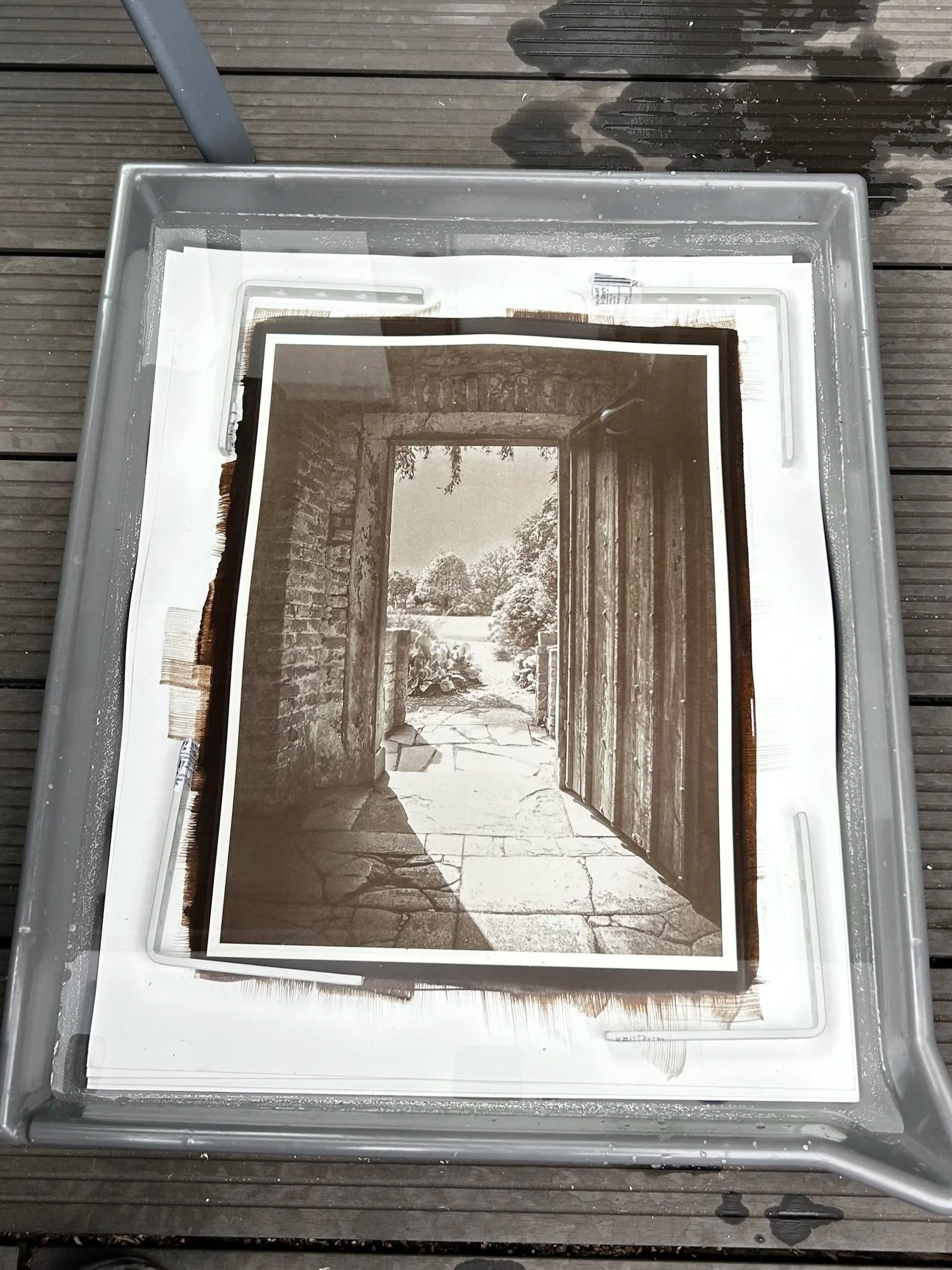
here’s the photo after developing ,fixing and a selenium tone and 30 minuet final running archival wash, shown in daylight under water
The kallitype was introduced in 1889 by W. W. J. Nicol and quickly gained attention because it could produce rich, platinotype-like images without the high cost of platinum. During the late 19th and early 20th centuries, photographers used kallitype for both artistic and commercial purposes. Interest declined as more convenient silver-gelatin processes became dominant, but the technique survived in the hands of craft-minded photographers.
Why people still make kallitypes today
Aesthetic quality: kallitypes have a distinctive tonal range and surface character prized by fine-art photographers and collectors.
Handmade process: every print is individually coated and developed, giving slight variations and a strong sense of craft.
Tonal control: toning options allow artists to tailor colour and contrast in ways not possible with modern automated lab processes.
Historical continuity: the method connects contemporary practice with photographic history and traditional darkroom skills.
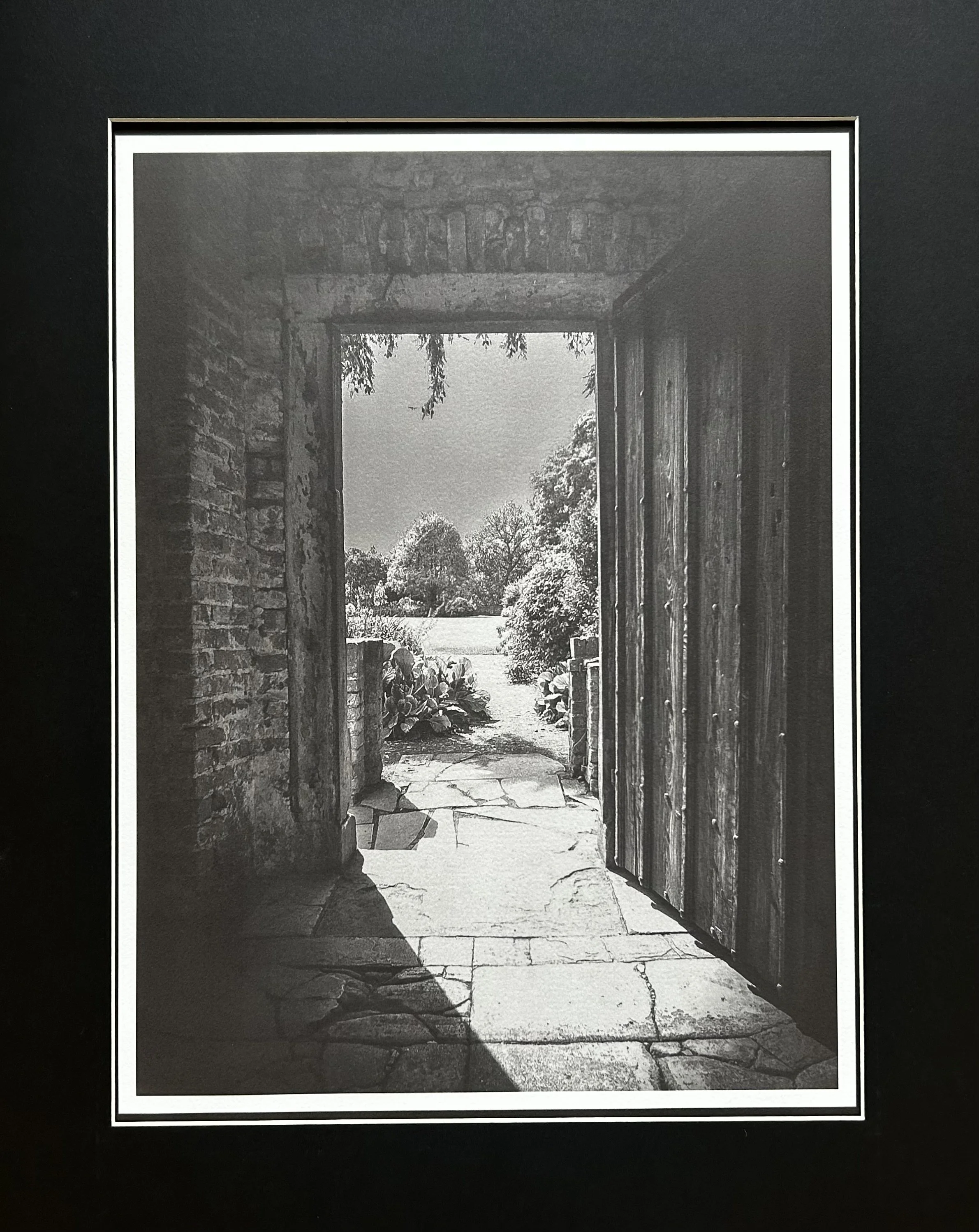
The final dry and flattened print with a black surround.
Kallitypes can be very stable when properly processed and toned, but they can be more vulnerable than modern silver-gelatin prints if not thoroughly cleared of residual chemicals. Good fixation, extensive washing and appropriate toning improve longevity. For display and storage, keep prints away from direct sunlight, high humidity and pollutants, and consider professional framing with archival materials.
There are many stages to the finished process from the initial photograph to the digital print, mixing the chemicals to the 12 or so individual steps to making the print, due to the nature of the process each one will be slightly different due to the hand printed process, this image is on a 16 inch x 20 inch French Bergger cot 320 paper that produces a lovely tonal range and quality feel in the hand
thanks for looking and reading, hope to start a few more blogs along the way